This blog isn't a platform for my (non-partisan, independent) political views, so I'll preface this post with the note that I'm strictly highlighting great creative work here - not promoting the Republican party or their Convention in Minneapolis. That said, Campbell Mithun developed a greative creative effort, designed to encourage Twin Cities residents to be gracious hosts of Republican Convention visitors. While Minneapolis/St. Paul residents can see the posters around town, the rest of us can see it at theunconvention.com under the "Make an Effort" tab. A great visual and simple tagline gets the message across pretty clearly..."be nice, people."
That said, I also found it interesting how preconceived notions plague many of our opinions - even the most self-proclaimed, open-minded and non-judgemental among us. I suppose it's simply human nature. As Malcolm Gladwell's "Blink" so convincingly proposed, we over time develop notions and ultimately make decisions based on very limited (and sometimes incorrect) observations - observations and prejudices that we're often unconscious of. Take, for instance, the notion of a Republican, as gently and amusingly depicted here. The other bar patrons drink beer, the Republican is awaited by a fancy schmany beverage. The beer guy serves the Republicans wine. Looks like Alex P. Keaton might still be the charicature that comes to most folks' minds when they conjure a Republican (and this great work is no exception to that mild stereotype).
Ah, stereotypes...
Tuesday, August 26, 2008
Thursday, August 7, 2008
Taking the hip out of the hipster...

I love when I read a piece that reads like an observation you're made at some point, but - as most fleeting thoughts do - goes without deeper analysis.
This is one of those articles.
I agree with the author that today's hipster collective is NOT about being counter-culture. It's become a social grouping (not a movement) based primarily on a shared aesthetic, or sense of style. I shudder at the realization that I'm about to use this term (I work in advertising), but it fits the bill - being classified as a hipster is about a "lifestyle", a look and a shared set of interests/ideals - that's why you usually find hipsters en masse at particular bars, concerts or gallery openings. Being a hipster doesn't carry the clout or validity that being a punk in the late 70's and early 80's did (though I'm sure they got s**t back then, too - hindsight is always 20/20) because it's not about social change, or rebellion. Given the broader acceptance in today's society - at least as compared to 20 or 40 years ago, and the existence of a profitable, valuable creative economy - there's little for hipsters to rebel against. Noone's censoring them, kicking them out of their parents' home for dreaming of art school instead of law school, denying them education, or forcing them into arranged marriages - so what is there to rebel against? And in terms of perception (the terms "obnoxious" and "predictable" have been tossed around), the youth of many hipsters - and the self-absorbed, self-seriousness that generally comes along with being young and having your self-identity depend on your peers' acceptance - certainly doesn't help.
Where I disagree with the author is on the notion that hipsters represent a notion or collective that past social/cultural groups have not. Could the same not have been said of the artistic counterculture of the 1960's - that so iconically embodied by Edie Sedgwick and Andy Warhol (muses to today's hipsters, no doubt). Did past journalists describe the mid-to-late punk scene as "vapid", "void" or "pointless"? I suspect people and journalists eventually grew as tired of the beautiful, hyperstylized tortured artists of the 50s and 60s - and of the punks of the 80s - as they're becoming of today's hipsters. Once the political or social repression that a movement erupted from dissolves, it all becomes less about questioning norms and more about style and aesthetics, no?

I'm tired of the hipster look, as well - and rather enjoy talking to someone with a similar interest in art, literature or music that can confidently rock an under-stylized, basic long-sleeve shirt and jeans, instead. Or *gasp* a dress without a hint of irony. But I think this has more to do with growing into yourself and no longer needing the uniformed approval of a social circle to define you - and less with "killing the hipster". Today's hipster, after all, is the greasy-haired, flannel-wearing grunge god of the early 90's - whom eventually got a gig at a start-up, made serious bank and dropped the Eddie Veder look.

Tuesday, June 17, 2008
A Call to Arms
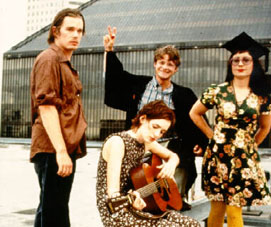
First off, this is a brilliantly wicked article - I nearly spit out my coffee in a few instances. Lanham's wit is commendable - Oscar Wilde would be proud. It would appear that the Gen X vs. Gen Y (errr, Millenials) debate shows no sign of aging, or media indifference - it just keeps getting coverage.
Two issues come to mind here - one is the Facebook "fairy" mishap, while the other is perceptions and misperceptions of Generations X and Y. On the Facebook mishap - it's a risk we all need to recognize. If you're going to post personal photos with no self-censorship - and not apply "limited profile" options to any colleagues you're connected to on Facebook - then any fibs and lies you tell might catch up with you. He lied to his boss to play hooky (something we've all done) - but his boss saw the photos he had publicly posted - and he was busted. That's an inherent risk in taking our lives public, to any degree, on the web; end of story. (And as an aside, I have to wonder - how trusted is this guy that his boss decided to fact-check his story on Facebook? Had this guy skipped out on work multiple other times, drawing suspicion? But I digress...)
The Gen X and Gen Y discussion is the more debatable (and, with tongue-in-cheek, combative) of the two. I agree that there are some broad attitudinal and even stylistic/aesthetic differences between the two Generations - particularly if you're considering what an Xer looked like in the 90's (grunge) vs. now (hipster). But I believe most of these differences have been sensationalized by the media (Radar and Time magazine articles included). I'm a Gen Xer, but on the border - I could easily straddle both Generations and share some of the key defining attitudes and traits of each. I work closely with both Xers and Yers, and do feel some of the dissonance between the two in terms of expectations, sense of merit and demand for instant recognition and responsibility. But to tell you the truth, I wonder if some of the older Gen Xers bitching about the Gen Yers had similar expectations and sense of what was "theirs" and due to them when they were younger - expectations that are based more on youthful, naive ideals common to most people growing up with opportunities and access to resources - and less on a unique insight into a generation magnified and sensationalized by the media.
I wonder if these arguably generational differences in expectations and entitlement have more to do with socio-economic class and the national economic climate. I'd guess that money - and the resources you're used to having access to -bear a stronger impact on what we think we can accomplish and deserve access to, than does the exact Generation we were born into. If you were born with resources and opportunities that money can buy (like a superior education or travel, for instance), chances are you might take those for granted and expect that they will always be at your disposal. More tellingly - does a Gen Yer from a higher-income family have the same set of expectations and sense of merit in the workplace than a Gen Yer from a middle or lower-income background? I'd also be interested to see the difference in household income/family wealth between a 21-year-old in 1993 and one in 2008. Just how much did that 21 year old have to take for granted then, vs. a 21-year old today?
I reserve some skepticism for anything that's hyped by the media - which is probably very characteristic of my Gen X-born self. The glorification of the differences between Gen X and Gen Y is included in that assessment. And so is anything depicted in "The Hills".
Friday, May 16, 2008
The Europeanization of the US

Much has been said about Gen Y's reluctance to sacrifice their personal lives to achieve career success. But with a declining competitive position in the Global economy and traditional, competitive corporate career paths being stripped of their formerly luxurious vermeer faster than an aging former Melrose Place actress, it feels as if a broader range of young US professionals (including Gen X) are "done" with the notion of making work and professional competition their priority (and strongest source of self-identity). Can anyone that worked 50+ hours a week at Goldman or a myriad of other investment banks possibly feel vindicated when the real estate crash has thrown their firm into bankruptcy - and negated the bonus they were counting on? Many young (or young at heart) professionals are growing jaded and instead setting their sites on a more traditionally European focus on quality of life - and looking into leaving their office gigs for more creative, lower paying, and less traditionally structured jobs. Some are even strongly considering moving to Europe altogether (which, ironically, seems to be Americanizing).
Is the US priming itself to enter into its own psuedo-Renaissance period - with a large wave of young professionals leaving their classic office jobs and instead taking up with a more creatively-focused (and lower paying) profession, pursuing their passions and taking more time to enjoy their personal lives? Are we looking at a busier Starbucks or local coffee shop on random afternoons - simply because it's nice out? More people working from home - or at least leaving the office at 5PM so they can make it in time to their Photography or Playwriting class? More cigarrettes being smoked to fuel our writing (and reading) more books, plays and scripts, taking (and selling) more photographs and attending more museums?
I certainly hope so. It's quarter to 2 on a Friday afternoon - I gotta run so I can wrap up and head out by 4PM to meet friends. And drink coffee. And wine. And take photographs outdoors. On a gorgeous Friday afternoon.
Wednesday, January 2, 2008
Black Sheep

I've always found unconventional people fascinating - the common thread that seems to tie them (us) all together is some degree of irreverence and an ability to relish in the confounded looks that their opinions, behavior or attire evokes from people. A little black sheep (or at least grey) in a mob of white is a surprisingly comforting reminder that we're not all interested in following a common schedule or plan in life that we had little do with establishing.
Taking unconventionality to an extreme, perhaps the most amusing and studied of the bunch are true eccentrics - not just those that question and defy particular conventions (most of us do to some degree), but those individuals that commit to their eccentricity and oddball ways as more than just a "phase", but a lifestyle. Someone who only wears one color, head to toe, every day of their adult life. The ancient man (or Imelda Marcos) that leaves his fortune to his dog. Howard Hughes. Joan Crawford. Karl Lagerfeld. Michael Jackson.
Two common denominators among eccentrics seem to be money and age. Christopher Hitchens' article on British eccentrics in January's Vanity Fair arguably says it best; "true eccentricity requires some leisure time, and some money, for its cultivation". If you're rich or old enough to afford not needing to be industrious and work to maintain a lifestyle, it's easy to see yourself getting bored. And if you get bored, you easily get into trouble. You start to think too much. Question too much, observe too much. Perceive that everything and everyone around you feels mundane, and that you need to develop an identity. So you begin to dress only in yellow, talk to your dog or pet cow (the only being that truly understands and loves you for who you are). Arrive at public events dressed in a tutu (particularly impressive if you're a man), ride a crocodile bareback, or spend an inordinate amount of time observing clouds (see Vanity Fair article).
Eccentrics keep the world around them interesting (and interested) - particularly when it's a wealthy circle with time, expectations, norms, an implicit code of conduct, and few responsibilities in their hands. You rarely hear about poor or middle-class eccentrics. Instead, they're condemned as crazy, senile, or tacky. It's mostly only the rich (or onetime wealthy) that become eccentric. They have the luxury of time, resources and imagination - and use it very comically (and vainly) to avoid becoming the cliched old, rich man/woman - only to ironically become the cliched eccentric, old, rich man/woman. Only the context for the eccentricity itself seems to differ.
Cheers to the eccentric, bizarre, quirky and original that keep the world colorful and offbeat - but here's to hoping that they'll leave their money to a good, charitable cause and not to their pet parrot.
Thursday, November 29, 2007
Muse

If ever there was a muse for bloggers, I think Diablo Cody just might be it. A stripper and phone sex operator in a former life, she's now a noted Hollywood screenplay writer, working with the likes of Spielberg and Jason Reitman. So what formula does one follow to attempt to replicate this success? How much of it is wit and raw talent? Or a pre-destined alignment to be in the right place (online) at the right time? A colorful (and marketable) past that yielded some rich experiences ripe for writing and reading about? For all of these reasons - Diablo Cody, you're my hero.
"Success is a science - if you have the conditions, you get the result".
- Oscar Wilde
Thursday, November 1, 2007
Arrested Development
The media has been dedicating alot of copy lately to some macro-level observations on Gen X and Gen Y. I've also noticed this in discussions on the Planning side at work, where we're convinced that the next big insight is going to arise out of the researched differences between Gen X and Gen Y - and I'm sure that we're not the only ones having that conversation. One frequent discussion has been about how Gen X and Gen Y have delayed the process of "growing up" and reaching adulthood - or how we've found a way to redefine it.
I understand questioning what "responsible adulthood" means, and concluding that conforming to certain standards - a conservative attitude dressed in a button-down shirt, accompanied by a traditional office or managerial job, a wife/husband and a mortgage - are not the only ways to validate adulthood. I'm a big proponent for delaying certain decisions - like marriage, or committing to a city for more than 2 years - until you're good and ready. Some of us might ultimately decide that we don't ever want either of those two and would be miserable (and make someone else miserable) succombing to it (marriage and/or a permanent address).
The recent media deluge of Gen Y observations focus on some generalized positive and negative traits. Pundits have waxed rhapsodically about Gen Yers' hypothesized sense of entitlement at work (where the term "paying your dues" or "climbing the ladder" seem to be outdated), their reliance on parents to fund their mistakes and decisions, and their ingrained sense of "I can do no wrong" after being coddled by parents afraid of shattering their self-esteem. Yes, they're generalizations, and I recognize that there's plenty of individuals with these same traits that are not part of Gen Y - they're personality traits, not strictly generational. Despite that, I recognize a grain of truth in those generalizations - and what alarms me most about them is that they imply the absense of a backbone.
Are Gen Y, some of Gen X, and future generations progressively developing weaker spines? Afraid to fall down, pick ourselves up and dust ourselves off (vs. having someone else do the cleaning up for us)? Incapable of recognizing that we're not always going to be right - and accepting responsibility when we're wrong without having it invalidate our self-esteem? Paralyzed at the thought of confronting someone when they did something that irked or hurt us - and instead blogging about it or broadcasting it on MySpace? Hesitant to work for something (like a position at work, or even a person) that might require an investment of time and effort - vs. an immediate pay-off?
Is this generational? Did recessions, weaker economies, World Wars, the absence of social networks/mobile phones/internet, and a world before the women's lib movement make the Baby Boomers and previous generations any more thick-skinned than we've become? Or is my actual experience and view too limited to that of my generation to realize that other generations (which I've only mostly been able to assess through film, literature, and my parents) grappled with the same self-critique?
I understand questioning what "responsible adulthood" means, and concluding that conforming to certain standards - a conservative attitude dressed in a button-down shirt, accompanied by a traditional office or managerial job, a wife/husband and a mortgage - are not the only ways to validate adulthood. I'm a big proponent for delaying certain decisions - like marriage, or committing to a city for more than 2 years - until you're good and ready. Some of us might ultimately decide that we don't ever want either of those two and would be miserable (and make someone else miserable) succombing to it (marriage and/or a permanent address).
The recent media deluge of Gen Y observations focus on some generalized positive and negative traits. Pundits have waxed rhapsodically about Gen Yers' hypothesized sense of entitlement at work (where the term "paying your dues" or "climbing the ladder" seem to be outdated), their reliance on parents to fund their mistakes and decisions, and their ingrained sense of "I can do no wrong" after being coddled by parents afraid of shattering their self-esteem. Yes, they're generalizations, and I recognize that there's plenty of individuals with these same traits that are not part of Gen Y - they're personality traits, not strictly generational. Despite that, I recognize a grain of truth in those generalizations - and what alarms me most about them is that they imply the absense of a backbone.
Are Gen Y, some of Gen X, and future generations progressively developing weaker spines? Afraid to fall down, pick ourselves up and dust ourselves off (vs. having someone else do the cleaning up for us)? Incapable of recognizing that we're not always going to be right - and accepting responsibility when we're wrong without having it invalidate our self-esteem? Paralyzed at the thought of confronting someone when they did something that irked or hurt us - and instead blogging about it or broadcasting it on MySpace? Hesitant to work for something (like a position at work, or even a person) that might require an investment of time and effort - vs. an immediate pay-off?
Is this generational? Did recessions, weaker economies, World Wars, the absence of social networks/mobile phones/internet, and a world before the women's lib movement make the Baby Boomers and previous generations any more thick-skinned than we've become? Or is my actual experience and view too limited to that of my generation to realize that other generations (which I've only mostly been able to assess through film, literature, and my parents) grappled with the same self-critique?
Wednesday, October 17, 2007
Young New York?
There's a great article in New York magazine about Gawker (blog about media hounds in NYC). Might not be as relevant to those of us outside of NYC, but the sentiment/observations are pretty universal. In addition to some equally interesting and sad commentary on the petty, snarky judgements and criticism made by these bloggers - and the author's theories on what their motivation is for writing this - the piece makes an alarming observation on the overall attitude of young New York. While it's only 1 person's opinion - there's something about it that just feels close to reality. Makes Carrie Bradshaw feel like an even more far-fetched fairy tale character...
"No other form has lent itself so perfectly to capturing the current ethos of young New York, which is overwhelmingly tipped toward anger, envy, and resentment at those who control the culture and apartments. “New York is a city for the rich by the rich, and all of us work at the mercy of rich people and their projects,” says Choire Sicha, Gawker’s top editor (he currently employs a staff of five full-time writers). “If you work at any publication in this town, you work for a millionaire or billionaire. In some ways, that’s functional, and it works as a feudal society. But what’s happened now, related to that, is that culture has dried up and blown away: The Weimar-resurgence baloney is hideous; the rock-band scene is completely unexciting; the young artists have a little more juice, but they’re just bleak intellectual kids; and I am really dissatisfied with young fiction writers.” Sicha, a handsome ex-gallerist who spends his downtime gardening on Fire Island, is generally warm and even-tempered, but on this last point, he looks truly disgusted. “Not a week goes by I don’t want to quit this job,” he says, “because staring at New York this way makes me sick.”
"No other form has lent itself so perfectly to capturing the current ethos of young New York, which is overwhelmingly tipped toward anger, envy, and resentment at those who control the culture and apartments. “New York is a city for the rich by the rich, and all of us work at the mercy of rich people and their projects,” says Choire Sicha, Gawker’s top editor (he currently employs a staff of five full-time writers). “If you work at any publication in this town, you work for a millionaire or billionaire. In some ways, that’s functional, and it works as a feudal society. But what’s happened now, related to that, is that culture has dried up and blown away: The Weimar-resurgence baloney is hideous; the rock-band scene is completely unexciting; the young artists have a little more juice, but they’re just bleak intellectual kids; and I am really dissatisfied with young fiction writers.” Sicha, a handsome ex-gallerist who spends his downtime gardening on Fire Island, is generally warm and even-tempered, but on this last point, he looks truly disgusted. “Not a week goes by I don’t want to quit this job,” he says, “because staring at New York this way makes me sick.”
Thursday, October 4, 2007
Visionaries (?)
I read an article about the former founder and Editor of this teen-oriented magazine, and her endeavors since (reportedly voluntarily) leaving the post. It started me thinking about visionaries and the self-initiative that drives many entrepreneurs and artists to pursue and ultimately profit from unconventional, forward-thinking ideas. Specifically - the passion for their ideas, drive to get it done, and unrelenting faith in seeing that idea come to (profitable) fruition.
Atoosa Rubinstein, left her post to pursue her passion in youth-oriented new media, collaborating with artists to develop these YouTube (arguably informative) videos. She's doing this with no profit target or particular business model in mind - for the time being - stating that this particular venture is currently purely an outlet for her creativity, and a means to continue to engage with the legions of young (aged and/or spirited) readers she's accrued since her time with CosmoGirl. Granted - she's got the financial freedom to be able to take some time off without focusing on a profit - and I'm sure she continues to get paid for her substantial insight into the collective and viable youth demographic - until her next digital media business model doubtlessly forms. But until it does, she has her sights on substantiating her creative ideas somehow (like these videos), and trusting that the way to profit from these will materialize itself during the process.
I love studying visionaries; their passion for a particular idea. The process of surrounding oneself with others with complementary interests, turning others onto your idea, and persuading them to become collaborators or investors. That moment when the idea and a way to generate revenue from it align. But most fascinating to me is the much-written and discussed reality that many of these visionaries have zero idea how their passion or idea will be profitable - they just focus on the end goal of substantiating that idea - and trust that the way to develop a profitable business model to support it will be revealed along the way.
That passion and vision is inspring to me...now I just need the discipline to concentrate on at least one single idea/vision for long enough to be able to do something about it...
Atoosa Rubinstein, left her post to pursue her passion in youth-oriented new media, collaborating with artists to develop these YouTube (arguably informative) videos. She's doing this with no profit target or particular business model in mind - for the time being - stating that this particular venture is currently purely an outlet for her creativity, and a means to continue to engage with the legions of young (aged and/or spirited) readers she's accrued since her time with CosmoGirl. Granted - she's got the financial freedom to be able to take some time off without focusing on a profit - and I'm sure she continues to get paid for her substantial insight into the collective and viable youth demographic - until her next digital media business model doubtlessly forms. But until it does, she has her sights on substantiating her creative ideas somehow (like these videos), and trusting that the way to profit from these will materialize itself during the process.
I love studying visionaries; their passion for a particular idea. The process of surrounding oneself with others with complementary interests, turning others onto your idea, and persuading them to become collaborators or investors. That moment when the idea and a way to generate revenue from it align. But most fascinating to me is the much-written and discussed reality that many of these visionaries have zero idea how their passion or idea will be profitable - they just focus on the end goal of substantiating that idea - and trust that the way to develop a profitable business model to support it will be revealed along the way.
That passion and vision is inspring to me...now I just need the discipline to concentrate on at least one single idea/vision for long enough to be able to do something about it...
Thursday, September 6, 2007
Bloated: A rant on arrogance and competing self-identities
Arrogance is nothing new, and as such should have no particular reason for bothering me now more than...say...5 years ago. It's probably been around since shortly after the first social, political and academic organizations formed. Nix that - the trait likely first emerged as soon as there were sufficient people around to impress. Cockiness, conceit, and (oftentimes false) bravado - while these descriptions have traditionally and more heavily been associated with (or socialized into) men, they still occur in the female variety. Sometimes arrogance is founded - though it would more effectively be left alone as self-confidence. But more often than not, it's without substance. Despite its varying forms and age-old existence, why is arrogance a trait that publicly gets a bad rep, but still seems to be encouraged behind closed doors? And more tellingly, why is its source often left unquestioned?
One of the richest (and most comical) places to see this dynamic at play is in the workplace. With all that's been written in the press lately about the sense of entitlement that generally characterizes Gen Y at work, it's likely that we all know at least one of "that guy or girl". The one that states opinion as fact. The one that answers questions about issues he/she has had little involvement in - ones that are better answered by someone else. The one that recounts client expectations, reactions, and discussions with the assumed tone and delivery of a first-hand participant - even when he/she wasn't involved. Even when he/she has been on the job for a matter of weeks. (I also wrote about this guy/gal in my last posting - see "Archetypes at Work").
What misguided management book - or mentor from the school of seagull management - encouraged this person to use this self-assumed level of authority as a persuasion strategy and power play? Yes, human nature and common sense indicate that people tend to listen when you speak with confidence and authority - no surprises there - but authority on a subject is gained through experience and research - not by assumed tone and perception. Someone is bound to eventually question what the source of this person's presumed authority is - if not because they possess some intelligence and discernment, at least because the perpetrator of this ultimately annoying "authority" will likely begin to irritate the hell out of most colleagues within a few weeks. Common sense and ancient advice tell us that confidence, doing your research, taking calculated risks, and trusting your gut are effective strategies, but they don't preclude actually doing the research and gaining the experience that serves as the foundation for that confidence. At the expense of sounding crude - this "perception is reality" attitude takes on the swagger, demeanor and voice of someone that's full of s--t. And that particular scent will always give you away.
Of course, arrogance isn't limited to the office. Socially, arrogance is oftentimes dressed up, tarted up, and allowed to sneak in unchecked if it makes up the right backstory. Perhaps it's our American tendency to supersize everything that encourages what would otherwise be a healthy self-confidence to push moderation aside, indulge and bloat up into full-blown arrogance. There are several examples of exagerated, bloated confidence and authority in the social realm - the cruel but popular high school kids that govern by fear (of your being the object of their mean-spirited jokes), the proverbial "bad boy" that's adulated for his me-first carelessness, the cheeky tees that let everyone within eyeshot know "I'm kind of a big deal". Much more subtle and passive than these, it's one-upmanship that I find the most fascinating and amusing. Because sadly, at one point or another, we've mostly all gotten caught up in it before realizing what we're doing (and why).
Who got invited to or learned about a promising shindig first. Name dropping, who-knows-who, and how well. How many obscure indie rock bands or film references you know. What artsy publications you cite as your sources. Who's first to wear a new designer or style. Drawing the line between a conversation that is sincerely based on the open, sincere exchange of opinions, ideas, and personal interests - and one that turns into a very subtle competition or comparison of who is better-informed or connected - can be an extremely vague exercise. The subsequent inquisition on who told you, or how/where you learned of it. The look of unease and discomfort at not having an equally informed response or reaction. It's not exactly something you can define or prove, other than describe it as a distinct impression that you're being evaluated or compared against someone else's self-identity.
What makes most of us susceptible to letting what should be an open, honest exchange of ideas turn competitive? Is it the feeble, transient nature of the criteria we're often using to define our identities? Is it our well-veiled insecurity and fear of no longer being interesting or desirable company if we aren't always uniquely-dressed, well-versed on emerging talent or quick with an obscure literary or film reference? Is this sense of competition and arrogance over ultimately incomplete factors in our identity really masking our insecurity?
Before I get any more critical with my observation or hypothetical with my questions, let me add that I know I'm guilty of it, too. After all, it might be a tad trite, but applicable - noone can make you feel inferior unless you let them (or yourself). My concluding comment on what I recognize was a rather "dynamic" subject (for those of you still following, it was originally arrogance, but ended as insecurity and competing self-identities) is just how ultimately ineffective and incomplete certain criteria are in developing our self-identity. There will always be someone better connected in a particular circle, more experienced in a particular field, better informed in a particular subject, more stylish or even smarter than you. I can't believe that to be the worst thing ever, or a challenge to my self-identity - particularly not when what's the most difficult to replicate are the collective characteristics that make someone so unique. A seeming contradiction of Barbie-doll looks and witty intelligence. A consistently positive outlook on life, despite some otherwise skin-thickening experiences. A penchant for dirty jokes and foul language, but a virginal-till-marriage existence. That's much tougher to compare or compete on, vs. an encyclopedic knowledge of anything you can devise a Top 10 list of.
One of the richest (and most comical) places to see this dynamic at play is in the workplace. With all that's been written in the press lately about the sense of entitlement that generally characterizes Gen Y at work, it's likely that we all know at least one of "that guy or girl". The one that states opinion as fact. The one that answers questions about issues he/she has had little involvement in - ones that are better answered by someone else. The one that recounts client expectations, reactions, and discussions with the assumed tone and delivery of a first-hand participant - even when he/she wasn't involved. Even when he/she has been on the job for a matter of weeks. (I also wrote about this guy/gal in my last posting - see "Archetypes at Work").
What misguided management book - or mentor from the school of seagull management - encouraged this person to use this self-assumed level of authority as a persuasion strategy and power play? Yes, human nature and common sense indicate that people tend to listen when you speak with confidence and authority - no surprises there - but authority on a subject is gained through experience and research - not by assumed tone and perception. Someone is bound to eventually question what the source of this person's presumed authority is - if not because they possess some intelligence and discernment, at least because the perpetrator of this ultimately annoying "authority" will likely begin to irritate the hell out of most colleagues within a few weeks. Common sense and ancient advice tell us that confidence, doing your research, taking calculated risks, and trusting your gut are effective strategies, but they don't preclude actually doing the research and gaining the experience that serves as the foundation for that confidence. At the expense of sounding crude - this "perception is reality" attitude takes on the swagger, demeanor and voice of someone that's full of s--t. And that particular scent will always give you away.
Of course, arrogance isn't limited to the office. Socially, arrogance is oftentimes dressed up, tarted up, and allowed to sneak in unchecked if it makes up the right backstory. Perhaps it's our American tendency to supersize everything that encourages what would otherwise be a healthy self-confidence to push moderation aside, indulge and bloat up into full-blown arrogance. There are several examples of exagerated, bloated confidence and authority in the social realm - the cruel but popular high school kids that govern by fear (of your being the object of their mean-spirited jokes), the proverbial "bad boy" that's adulated for his me-first carelessness, the cheeky tees that let everyone within eyeshot know "I'm kind of a big deal". Much more subtle and passive than these, it's one-upmanship that I find the most fascinating and amusing. Because sadly, at one point or another, we've mostly all gotten caught up in it before realizing what we're doing (and why).
Who got invited to or learned about a promising shindig first. Name dropping, who-knows-who, and how well. How many obscure indie rock bands or film references you know. What artsy publications you cite as your sources. Who's first to wear a new designer or style. Drawing the line between a conversation that is sincerely based on the open, sincere exchange of opinions, ideas, and personal interests - and one that turns into a very subtle competition or comparison of who is better-informed or connected - can be an extremely vague exercise. The subsequent inquisition on who told you, or how/where you learned of it. The look of unease and discomfort at not having an equally informed response or reaction. It's not exactly something you can define or prove, other than describe it as a distinct impression that you're being evaluated or compared against someone else's self-identity.
What makes most of us susceptible to letting what should be an open, honest exchange of ideas turn competitive? Is it the feeble, transient nature of the criteria we're often using to define our identities? Is it our well-veiled insecurity and fear of no longer being interesting or desirable company if we aren't always uniquely-dressed, well-versed on emerging talent or quick with an obscure literary or film reference? Is this sense of competition and arrogance over ultimately incomplete factors in our identity really masking our insecurity?
Before I get any more critical with my observation or hypothetical with my questions, let me add that I know I'm guilty of it, too. After all, it might be a tad trite, but applicable - noone can make you feel inferior unless you let them (or yourself). My concluding comment on what I recognize was a rather "dynamic" subject (for those of you still following, it was originally arrogance, but ended as insecurity and competing self-identities) is just how ultimately ineffective and incomplete certain criteria are in developing our self-identity. There will always be someone better connected in a particular circle, more experienced in a particular field, better informed in a particular subject, more stylish or even smarter than you. I can't believe that to be the worst thing ever, or a challenge to my self-identity - particularly not when what's the most difficult to replicate are the collective characteristics that make someone so unique. A seeming contradiction of Barbie-doll looks and witty intelligence. A consistently positive outlook on life, despite some otherwise skin-thickening experiences. A penchant for dirty jokes and foul language, but a virginal-till-marriage existence. That's much tougher to compare or compete on, vs. an encyclopedic knowledge of anything you can devise a Top 10 list of.
Wednesday, September 5, 2007
Archetypes at Work
Working at an office of any sort, you're exposed to a number of different personalities, characters and politics. Entire sitcoms, comic strips and books have been dedicated to the study of office dynamics and archetypical characters. Take, for instance, the micro-managing boss who's threatened by a potentially smarter, more effective successor. The alliance of 3 or so long-term employees that lunch together, seem to be promoted together, and leave the company together. The chatty connector, who is the first to hear (and oftentimes repeat) every bit of office gossip. It can be a perfect study in human behavior to see cliques form, alliances made and unwritten rules observed.
Working in the Marketing department of a rather large company, I'm particularly amused by how consistent some of these characters are across the different companies, offices and industries I've worked in. While each character or archetype may not show up in each and every single office (industries and personnel count does factor into this), similar characterists and hybrid characters will factor into the dynamics of most every office. After a loaded office happy hour recently, it struck me how similar office life is to high school or college - after all, they're all organized human institutions, with subsequent norms, rules and expectations to govern people's behavior. Why wouldn't the same social skills required to successfully navigate high school or college and depart with the experiences that you desired (not everyone wanted to be Greek, or Valedictorian) - be the same skills necessary to navigate office life?
Let me first clarify that I am NOT implying that we need to regress to high school or collegiate culture (and maturity level) in order to become a valued, well-liked colleague at the office. I think life is all about figuring out what experiences you want to have, and then developing the skills and identifying the opportunities that will facilitate your having them. Fortunately, we don't all want the exact same experiences in college, life or at the office. I also recognize that the beauty and character in individuals is found in those idiosyncratic and unexpected characteristics - the beauty that is also incredibly observant and witty; the successful financier that happens to be a nonconformist; the studied, well-read individual that balances out his intellect with a full social life and circle of varied acquaintances. These are the people that aren't fully described by any archetype or stereotype.
But because educational and professional institutions are very human, they're also very prone to being governed by similar norms, expectations and unspoken codes of conduct (albeit more sophisticated, mature ones in the workplace - you hope). Keeping in mind that these are generalizations and that we now (hopefully) know that no one is completely defined by such a limited classification - we could take different high school or collegiate archetyples (for the purpose of dramatization, of course), consider some of the key traits that characterized their behavior in and dynamics within the high school or collegiate social structure - and apply what we knew (or didn't know we knew then) to successfully navigate, outsmart (and even get promoted within) today's place of business. Take the following:
Archetype 1: Student Council President then: Most Promotable Employee now
Diplomatic. Multi-faceted. Might have been an honor roll student taking AP courses, but also an athlete, or drama/choir/debate geek. Had plenty of friends, was nice to most everyone, and made few - if any - enemies. At the office, this is the person that everyone likes - can talk to the tech guys about the new iPhone and the merits of Macs vs. PCs, to senior management about employee morale and the strategy behind the latest ad campaign, will remember the Admins on Administrative Assistants' Day, and will be social, fun and friendly at every happy hour. This is the person that crosses clique lines. He or she is positive, diplomatic, enthusiastic and well-rounded - they score invites to other departmental happy hours. They're valued by management as having "potential". They get promoted.
Archetype 2: The Quiet Nerd then. Overworked and Unrecognized now.
Smart. Knows the material inside and out. Keeps his or her head down and hesitates to speak up about his or her opinion. The few times that he/she does, it's said with such low confidence that it tends to be easily forgotten or discredited. Doesn't get too involved in the social/political aspects of the office. All this considered, tends to get overlooked, both socially and during performance reviews. Could learn a bit from Student Council President - or from The Homecoming Queen...
Archetype 3: The Homecoming Queen then. Most Envied and Desired Co-Worker now.
Could be very smart, which only helps further her case. Might be a cold bitch. But in other examples, has also been known to be a genuinely nice person. Intelligence and quality of work aside, she's physically attractive. Gets invited to meetings (even those she doesn't necessarily belong in) and out-of-office functions. Tends to maintain some manner of distance and mystery. The women collectively like/envy/fear/admire her, the men just can't stop looking at her. Terribly effective at getting proposals approved rather quickly. Object of much gossip and discussion. Might end up dating the Student Council President.
Archetype 4: The Gossip then. The Chatty Connector now.
Knows everyone and their backstories. Has been with the company for a while. Will be with the company for a while. Tends to be female. Her best asset is not so much her talent, intelligence or aptitude for her role (which she might have), but rather how many people she knows, how much she knows about them, and how much people tell her. She knows the culture, the history, the gossip. Don't tell her any personal details that you wouldn't want the entire office to know about you. Don't make her your enemy - she'll be around longer than you will. Embodies the adage "it's not what you know, it's whom you know".
Archetype 5: The Poser then. The Full-of-S--t Salesman now.
To be fair, he may not even be in Sales. Could be Marketing, Media or even Finance. We all know this guy - cocky (usually false bravado), free with the meaningless marketing-speak or corporate lingo. Talks about himself and espouses his opinion frequently. Rarely backs it with sound reasoning, data, or any support, really - other than his opinion. Despite his clearly incomplete knowlege or limited involvement on a particular business issue, he states his opinion or take on it as fact. Interviews well. Is often disliked quickly once hired. Validates the notion that HR can't spot a lemon, even while they're driving it.
Could these characteristics be identified as a general list of what to do, or not do, to get ahead at work? Of course - but putting it in the context of archetypes is so much richer and fun.
Working in the Marketing department of a rather large company, I'm particularly amused by how consistent some of these characters are across the different companies, offices and industries I've worked in. While each character or archetype may not show up in each and every single office (industries and personnel count does factor into this), similar characterists and hybrid characters will factor into the dynamics of most every office. After a loaded office happy hour recently, it struck me how similar office life is to high school or college - after all, they're all organized human institutions, with subsequent norms, rules and expectations to govern people's behavior. Why wouldn't the same social skills required to successfully navigate high school or college and depart with the experiences that you desired (not everyone wanted to be Greek, or Valedictorian) - be the same skills necessary to navigate office life?
Let me first clarify that I am NOT implying that we need to regress to high school or collegiate culture (and maturity level) in order to become a valued, well-liked colleague at the office. I think life is all about figuring out what experiences you want to have, and then developing the skills and identifying the opportunities that will facilitate your having them. Fortunately, we don't all want the exact same experiences in college, life or at the office. I also recognize that the beauty and character in individuals is found in those idiosyncratic and unexpected characteristics - the beauty that is also incredibly observant and witty; the successful financier that happens to be a nonconformist; the studied, well-read individual that balances out his intellect with a full social life and circle of varied acquaintances. These are the people that aren't fully described by any archetype or stereotype.
But because educational and professional institutions are very human, they're also very prone to being governed by similar norms, expectations and unspoken codes of conduct (albeit more sophisticated, mature ones in the workplace - you hope). Keeping in mind that these are generalizations and that we now (hopefully) know that no one is completely defined by such a limited classification - we could take different high school or collegiate archetyples (for the purpose of dramatization, of course), consider some of the key traits that characterized their behavior in and dynamics within the high school or collegiate social structure - and apply what we knew (or didn't know we knew then) to successfully navigate, outsmart (and even get promoted within) today's place of business. Take the following:
Archetype 1: Student Council President then: Most Promotable Employee now
Diplomatic. Multi-faceted. Might have been an honor roll student taking AP courses, but also an athlete, or drama/choir/debate geek. Had plenty of friends, was nice to most everyone, and made few - if any - enemies. At the office, this is the person that everyone likes - can talk to the tech guys about the new iPhone and the merits of Macs vs. PCs, to senior management about employee morale and the strategy behind the latest ad campaign, will remember the Admins on Administrative Assistants' Day, and will be social, fun and friendly at every happy hour. This is the person that crosses clique lines. He or she is positive, diplomatic, enthusiastic and well-rounded - they score invites to other departmental happy hours. They're valued by management as having "potential". They get promoted.
Archetype 2: The Quiet Nerd then. Overworked and Unrecognized now.
Smart. Knows the material inside and out. Keeps his or her head down and hesitates to speak up about his or her opinion. The few times that he/she does, it's said with such low confidence that it tends to be easily forgotten or discredited. Doesn't get too involved in the social/political aspects of the office. All this considered, tends to get overlooked, both socially and during performance reviews. Could learn a bit from Student Council President - or from The Homecoming Queen...
Archetype 3: The Homecoming Queen then. Most Envied and Desired Co-Worker now.
Could be very smart, which only helps further her case. Might be a cold bitch. But in other examples, has also been known to be a genuinely nice person. Intelligence and quality of work aside, she's physically attractive. Gets invited to meetings (even those she doesn't necessarily belong in) and out-of-office functions. Tends to maintain some manner of distance and mystery. The women collectively like/envy/fear/admire her, the men just can't stop looking at her. Terribly effective at getting proposals approved rather quickly. Object of much gossip and discussion. Might end up dating the Student Council President.
Archetype 4: The Gossip then. The Chatty Connector now.
Knows everyone and their backstories. Has been with the company for a while. Will be with the company for a while. Tends to be female. Her best asset is not so much her talent, intelligence or aptitude for her role (which she might have), but rather how many people she knows, how much she knows about them, and how much people tell her. She knows the culture, the history, the gossip. Don't tell her any personal details that you wouldn't want the entire office to know about you. Don't make her your enemy - she'll be around longer than you will. Embodies the adage "it's not what you know, it's whom you know".
Archetype 5: The Poser then. The Full-of-S--t Salesman now.
To be fair, he may not even be in Sales. Could be Marketing, Media or even Finance. We all know this guy - cocky (usually false bravado), free with the meaningless marketing-speak or corporate lingo. Talks about himself and espouses his opinion frequently. Rarely backs it with sound reasoning, data, or any support, really - other than his opinion. Despite his clearly incomplete knowlege or limited involvement on a particular business issue, he states his opinion or take on it as fact. Interviews well. Is often disliked quickly once hired. Validates the notion that HR can't spot a lemon, even while they're driving it.
Could these characteristics be identified as a general list of what to do, or not do, to get ahead at work? Of course - but putting it in the context of archetypes is so much richer and fun.
Monday, August 27, 2007
101 things to do...
I love the mundane sense of purpose and organization that checklists can give to my everyday life - it's the only way I can remember every minute but necessary task, like paying my bills on time, getting an oil change, buying gel shoe inserts, etc. But what I appreciate the most is the sense of satisfaction that follows checking each item off. If I feel that level of satisfaction from checking off "buy paper towel", imagine the euphoria and sense of pride that I'd derive after achieving and subsequently checking off my more ambitious life goals, if formalized as a "to-do" list. There's something about writing a list that makes you feel accountable for completing those items - instead of only sporadically considering them as fleeting thoughts that are ultimately deferred to the back of your head, and filed away for future reference (when the time is right, when I turn 30, when I get a raise, etc.). So with thes fresh motivation provided by this article in today's NY Times, here's an initial list of some things I'd like to do during my lifetime, in no particular order - more to come.
http://www.nytimes.com/2007/08/26/fashion/26list.html?pagewanted=2&ref=fashion
1. Earn a second Master's degree - an MFA in Communications - from a highly accredited University
2. Become a published writer - have a piece published in at least one of the publications I most admire
3. Fall in love with someone that loves to travel as much as I do (and who's spontaneous enough to plan a trip with me with 1 week's - or less - notice). That shared love of travel might ultimately include an equally spontaneous, little planned destination wedding.
4. Own or co-own my own condo or townhouse
5. Have an exposed brick wall designed or already built into said condo or townhouse
6. Travel to Hawaii
7. Learn to snowboard
8. Take my nieces on a trip
9. Buy my parents a house to retire in, or at least help finance it
10. Treat my parents to post-retirement trips
11. Contribute a sizeable chunk of change to fund children's cancer research and treatment
12. Find opportunities to physically help or do something nice for someone every day (vs. just cutting a check) - for instance, ceding the right of way to someone that doesn't have it, talking to an older person at the grocery store, going out of my way to help someone pick something off the floor, etc.)
13. Find a job (or have it find me) that allows me to spend a significant amount of time in NYC regularly - say, 3-6 months out of the year, or once every couple of months.
14. Be promoted to at least Account Director in my current job
15. Collaborate in a creative project or business of some sort - a restaurant, a shop, a film, or music of some sort
.....
http://www.nytimes.com/2007/08/26/fashion/26list.html?pagewanted=2&ref=fashion
1. Earn a second Master's degree - an MFA in Communications - from a highly accredited University
2. Become a published writer - have a piece published in at least one of the publications I most admire
3. Fall in love with someone that loves to travel as much as I do (and who's spontaneous enough to plan a trip with me with 1 week's - or less - notice). That shared love of travel might ultimately include an equally spontaneous, little planned destination wedding.
4. Own or co-own my own condo or townhouse
5. Have an exposed brick wall designed or already built into said condo or townhouse
6. Travel to Hawaii
7. Learn to snowboard
8. Take my nieces on a trip
9. Buy my parents a house to retire in, or at least help finance it
10. Treat my parents to post-retirement trips
11. Contribute a sizeable chunk of change to fund children's cancer research and treatment
12. Find opportunities to physically help or do something nice for someone every day (vs. just cutting a check) - for instance, ceding the right of way to someone that doesn't have it, talking to an older person at the grocery store, going out of my way to help someone pick something off the floor, etc.)
13. Find a job (or have it find me) that allows me to spend a significant amount of time in NYC regularly - say, 3-6 months out of the year, or once every couple of months.
14. Be promoted to at least Account Director in my current job
15. Collaborate in a creative project or business of some sort - a restaurant, a shop, a film, or music of some sort
.....
Friday, August 24, 2007
It takes two...

I love the idea of people so enthralled by a particular subject that they form a subculture around it. Even more appealing to me is when they all look different (no visible hipsters here), are of different ages and demographic groups (they're not all South American!), and have completely different day jobs that couldn't be more far removed from the subject they're gathering around. Plus, the shameless, highly romanticized notion of virtual strangers gathering to learn how to tango in the Park is just priceless. *SIGH*, Summer in NYC...
http://www.nytimes.com/2007/08/25/nyregion/25summer.html?hp
Thursday, August 23, 2007
Where should my inner New Yorker live?
I knew it...
| You Belong in Brooklyn |
 Down to earth and hard working, you're a true New Yorker. And although you may be turning into a yuppie, you never forget your roots. |
Wednesday, August 22, 2007
A case of "wit of the staircase"

I recently read this piece on a NYC-based art world "it" couple's twin suicides. A multitude of thoughts and questions ensued as I read about their lives and the progression of events leading up to their deaths. My initial notion was that of their being a highly romanticized, contemporary version of Romeo and Juliet. Like Romeo and Juliet, at least one of two seems to have perceived themselves to be "doomed", with the other confidently and quickly concluding that life without their departed lover was simply not an option. These were talented artists that had earned more recognition for their work than what most with similar aspirations do. They were in love, intelligent, and had the ability to carve out success for themselves in a different niche, even if the transient dotings of LA and its film industry didn't materialize. They had a vast network of friends and contacts, as well as numerous viable projects to engage their creativity in. But I wonder if the same traits that oftentimes characterize a talented artist or creator - ambition, acute perception, sensitivity, and the ability to become so enamored by and engrossed in a particular subject or issue that it borders on obsession - spiraled into the paranoia and exasperation that made death seem like the only reprieve.
I realize these observations are based on a very limited perspective of these individuals' lives - the facts are those of a third-party publication. But my overarching observation (and question) is universal (and not strictly related to this couple); why does it oftentimes appear that many of the artists, philosophers, scientists and intellectuals so blessed with their respective talent are also cursed with an almost poetic propensity to have that genius turn on them and morph into insanity, depression, or other form of mental distress? You might argue that there's no evidence that these two were insane - merely haunted or troubled - but to be capable of committing suicide, you have to at least be in such a state of mental distress or depression to make that conclusive action appear to offer the only respite.
Is depression/mental distress simply one of the potential side-effects of genius? Of thinking and questioning too much, having too much imagination, and being too sensitive to both the most beautiful and ugliest aspects of humanity? Is it a chemical imbalance substantiated as both excessive intelligence and the absense of resilience? At what point does intelligence, sensitivity or genius derail and spiral into those darkest and seemingly hopeless of places?
Perhaps that's one too many questions from this oftentimes overly-analytical blogger - particularly when I can't supply my own answers. Though far from "genius", I think I'll continue to temper my own intelligence, musings and theories with a shot of idealism and hope, and with the acceptance that life has both light and dark - but the choice to focus on the (greater instance of) good will always help illuminate those darker corners.
Sunday, August 19, 2007
Quicksand
So I closed my MySpace account last week, after checking out Facebook and finding that most of my out-of-town friends were actually on Facebook. The primary reason I'd joined MySpace was the premise of a single source by which to keep in touch with friends in different cities - those that I can't otherwise catch up with on a regular basis. But after about a year, most of the friends leaving me comments and questions were the same ones I was with the night before. I'd read enough about the demographic profile of MySpace vs. Facebook members (surge in 28+ yr-old members on Facebook, more educated/professional on Facebook), increased privacy considerations, etc. to decide that it was likelier the more relevant utility for me. I was right - most of my out-of-town friends are on Facebook.
There are, of course, secondary, much less lofty or openly-discussed benefits to having your profile on a social network. The initial novelty of procrastinating and killing time by finding and adding your friends and acquaintances' profiles to your own "friends" list. Reading about what they have been doing - and viewing the photographic evidence thereof. Seeing who someone you're curious about hangs out with, what spot he or she might frequent on an average Thursday night, who they photograph themselves with (requisite self portrait with dramatic, pouty expression and bangs/hair in eyes), or how many grammatical errors and misspellings have littered their profile. It can offer you a voyeuristic view into someone's life and lead you to develop a very limited assessment of their personality - in some instances without actually getting to know them in the offline world.
Like (but easier than) MySpace, Facebook users and marketers have developed a multitude of applications by which to personalize your content and reflect your personal interests and tastes to your viewing public. A Wall for comments (ala MySpace's comments box) lets you leave and receive comments from those who you haven't seen since last night or since last year. SuperPoke allows for digital high-fiving, poking, or throwing a sheep at your friends or crushes, while iLike allows you to dedicate and send a song to someone for any given reason.
The process of familiarizing yourself with a social utility and personalizing your profile can become quite a time-consuming, self-introspective and anxiety-producing venture. What does giving "Titanic" a 2.5-star rating say about you? Does adding "Wonderwall" to your profile date your musical tastes and imply that you haven't quite expanded your musical repertoire beyond 90's alt rock? What about the fact that after your 5th day on Facebook, you've added 20 friends to your profile, while your former cube neighbor currently has 83? Will anyone care about you enough to send an iconic "gift", or throw a sheep at you? And will noting your political bent turn off prospective employers or dates researching you online?
I can't say I wasn't forewarned. The title is quite accurate: Friendster, Hi5, MySpace or Facebook alike - they're all SOCIAL utilities. They can make it easier to keep in touch with someone when the timezone differences or setting render a phone conversation inconvenient, when e-mail is too infrequently checked, when a text message requires too many key strokes or when a face-to-face conversation is otherwise not possible. But if your offline social endeavors even occassionally create some insecurity or social anxiety (Friend or frenemy? Is he dating her? How can I start a conversation if I run into him? Is my entourage socially crippling in expanding my range of acquaintances?) - a social network has the propensity to generate the same feelings and reactions that you derive from your friendships and interactions offline. What can I say - you can take the 28+, highly educated and upwardly mobile set out of high school - but you can't always take the high school out of them.
There are, of course, secondary, much less lofty or openly-discussed benefits to having your profile on a social network. The initial novelty of procrastinating and killing time by finding and adding your friends and acquaintances' profiles to your own "friends" list. Reading about what they have been doing - and viewing the photographic evidence thereof. Seeing who someone you're curious about hangs out with, what spot he or she might frequent on an average Thursday night, who they photograph themselves with (requisite self portrait with dramatic, pouty expression and bangs/hair in eyes), or how many grammatical errors and misspellings have littered their profile. It can offer you a voyeuristic view into someone's life and lead you to develop a very limited assessment of their personality - in some instances without actually getting to know them in the offline world.
Like (but easier than) MySpace, Facebook users and marketers have developed a multitude of applications by which to personalize your content and reflect your personal interests and tastes to your viewing public. A Wall for comments (ala MySpace's comments box) lets you leave and receive comments from those who you haven't seen since last night or since last year. SuperPoke allows for digital high-fiving, poking, or throwing a sheep at your friends or crushes, while iLike allows you to dedicate and send a song to someone for any given reason.
The process of familiarizing yourself with a social utility and personalizing your profile can become quite a time-consuming, self-introspective and anxiety-producing venture. What does giving "Titanic" a 2.5-star rating say about you? Does adding "Wonderwall" to your profile date your musical tastes and imply that you haven't quite expanded your musical repertoire beyond 90's alt rock? What about the fact that after your 5th day on Facebook, you've added 20 friends to your profile, while your former cube neighbor currently has 83? Will anyone care about you enough to send an iconic "gift", or throw a sheep at you? And will noting your political bent turn off prospective employers or dates researching you online?
I can't say I wasn't forewarned. The title is quite accurate: Friendster, Hi5, MySpace or Facebook alike - they're all SOCIAL utilities. They can make it easier to keep in touch with someone when the timezone differences or setting render a phone conversation inconvenient, when e-mail is too infrequently checked, when a text message requires too many key strokes or when a face-to-face conversation is otherwise not possible. But if your offline social endeavors even occassionally create some insecurity or social anxiety (Friend or frenemy? Is he dating her? How can I start a conversation if I run into him? Is my entourage socially crippling in expanding my range of acquaintances?) - a social network has the propensity to generate the same feelings and reactions that you derive from your friendships and interactions offline. What can I say - you can take the 28+, highly educated and upwardly mobile set out of high school - but you can't always take the high school out of them.
Thursday, August 16, 2007
Welcome to the Dollhouse...
I'm starting this blog - albeit a bit late in the blogging phenom - to increase the likelihood that I can someday soon say "I'm a writer", instead of "I really want to write more". I'm (arguably) lucky enough to work in advertising and at a large company - a career and location that offers a host of opportunities to muse, ponder, analyze and satirize the numerous characters, archetypes, and passive-aggressive political warfare that "The Office" episodes and certain New York Magazine articles are made of. Shame I haven't been able to turn these experiences into a source of profit just yet...but here's where writing about them comes into play.
I really do love writing, and figure I spend enough time musing on my experiences and observations resulting from my career and from my personal interests, that I might as well put them into written word. I'm hoping that blogging will get me comfortable with writing again - my first love and first undergrad major (more on that later) - and ideally manage to amuse some friends/acquintances in the meantime. You'll finally understand what goes through my head during those moments when I'm clearly only physically present in our conversations, or where a semi-evil half-smirk spreads across my lips...
I really do love writing, and figure I spend enough time musing on my experiences and observations resulting from my career and from my personal interests, that I might as well put them into written word. I'm hoping that blogging will get me comfortable with writing again - my first love and first undergrad major (more on that later) - and ideally manage to amuse some friends/acquintances in the meantime. You'll finally understand what goes through my head during those moments when I'm clearly only physically present in our conversations, or where a semi-evil half-smirk spreads across my lips...
Subscribe to:
Posts (Atom)